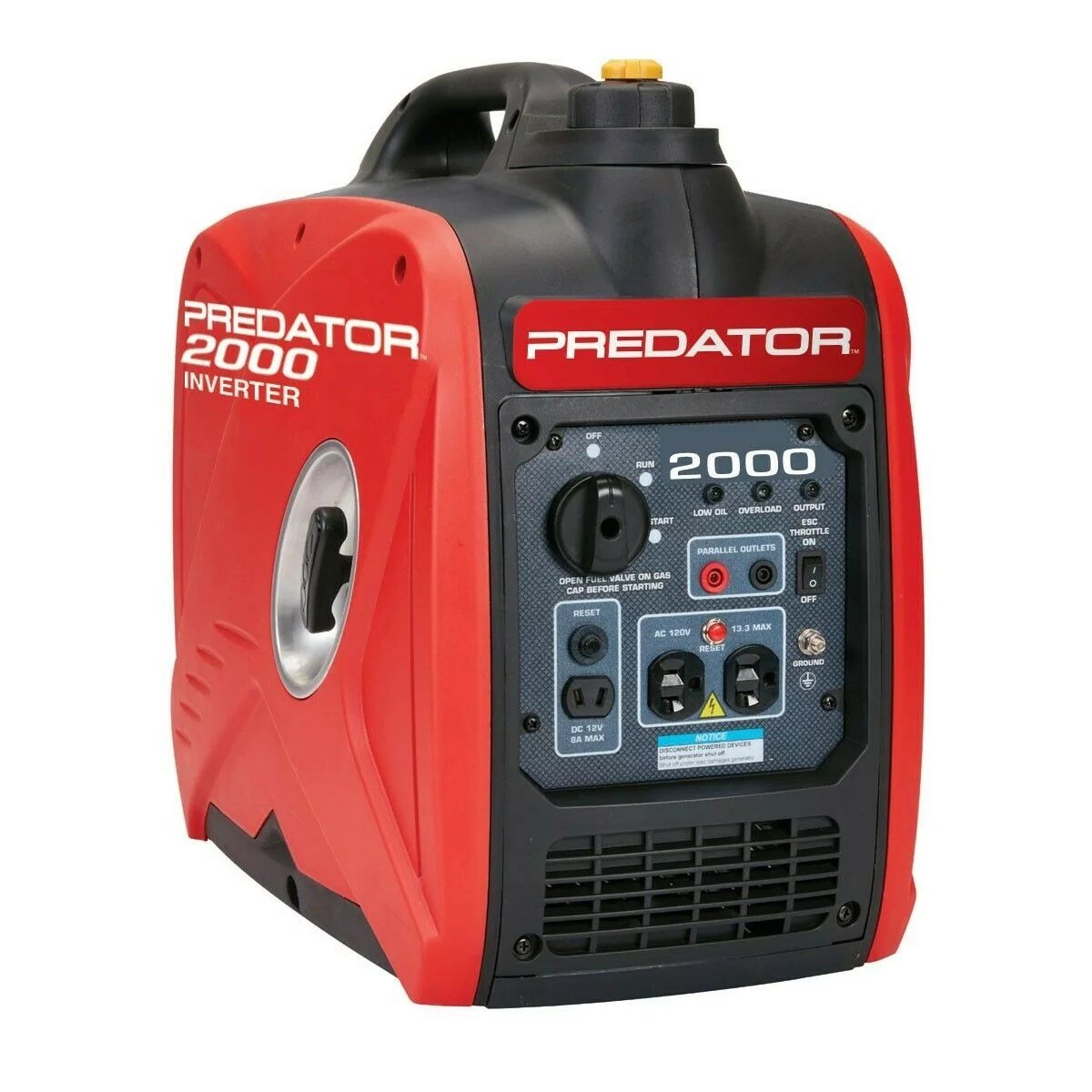
Imagine this: You're deep in the wilderness, the campfire crackles, but your phone battery is dying, or your CPAP machine needs power. Or perhaps a storm knocks out your grid, and you need to keep the fridge running and a few lights on. In these moments, reliable, portable power isn't a luxury—it's a necessity. This is where the Predator 2000 Watt Inverter Generator steps in, a compact dynamo that's been making waves in the portable power scene. For those delving into a comprehensive Predator Generator 2000 Overview & Reviews, you're about to uncover a truly capable machine.
This isn't just another generator; it's a meticulously engineered solution that balances power, portability, and price, often drawing favorable comparisons to more expensive models like the Honda eu2200i and WEN 56380i.
Predator 2000: At a Glance
- Power: 2000 starting watts, 1600 running watts – enough for essential devices and sensitive electronics.
- Engine: Robust 79.7cc OHV 4-stroke, gasoline-powered.
- Runtime: Up to 12 hours on a single 1.1-gallon tank at 25% load.
- Noise: A quiet 65 dB at 25% load, making it neighbor-friendly.
- Weight: Highly portable at just 47 pounds.
- Clean Power: Less than 3% Total Harmonic Distortion (THD), safe for laptops, phones, and more.
- Fuel Efficiency: Economy Mode reduces fuel consumption significantly.
- Parallel Ready: Connect two for double the power.
- Value: Offers premium performance without the premium price tag.
The Essential Role of Portable Power: Why the Predator 2000 Stands Out
In our increasingly connected and unpredictable world, having an independent power source is no longer just for extreme adventurers. From keeping your food fresh during an outage to powering tools at a remote site or simply enjoying modern comforts while camping, a portable generator offers invaluable peace of mind.
The Predator 2000 Watt Inverter Generator has carved out a strong niche precisely because it meets these diverse needs with surprising efficiency and quiet operation. Unlike older, clunkier generators, the Predator 2000 leverages inverter technology, which means it produces "clean" power. This is critical for today's sensitive electronics—think smartphones, tablets, laptops, and even medical devices like CPAP machines—which can be damaged by the fluctuating power of conventional generators. If you’re curious to learn more about this versatile power source, you'll find its capabilities extend far beyond basic power needs.
Under the Hood: A Deep Dive into the Predator 2000's Engineering
Understanding what makes this generator tick helps you appreciate its performance and decide if it's the right fit for your needs.
Power You Can Rely On: Output & Engine
At its core, the Predator 2000 features a robust 79.7cc OHV 4-stroke, air-cooled, gasoline-powered engine. This translates to a respectable 2000 starting watts and 1600 running watts. What does this mean in practical terms?
- Starting Watts (or peak watts) is the maximum power the generator can produce for a very short burst, typically needed to start appliances with motors (like a refrigerator or power tools).
- Running Watts (or continuous watts) is the steady power the generator can supply consistently.
With 1600 running watts, you can easily power a small refrigerator, a few lights, charge multiple devices, run a fan, or even operate a small coffee maker—just not all at once.
Marathon Runtimes & Savvy Fuel Efficiency
Despite its compact size, the Predator 2000 boasts impressive endurance. Its 1.1-gallon (4.2 liters) fuel tank allows for an exceptional 12 hours of runtime at 25% load or about 6.5 hours at 50% load. These figures are quite competitive, especially considering its compact footprint.
A key feature contributing to this efficiency is the Economy Mode button. When activated, the generator automatically adjusts its engine speed to match the power demand, reducing fuel consumption by up to 40% when you're only running lighter loads. It's a smart way to save gas and reduce wear and tear.
The Quiet Advantage: Keeping the Peace
One of the most praised aspects of inverter generators like the Predator 2000 is their reduced noise output. Operating at just 65 dB at 25% load, this generator is significantly quieter than traditional models. To put that in perspective, 65 dB is comparable to a normal conversation, making it ideal for campsites, tailgates, or anywhere you want power without the roar of a jet engine.
Powering Your Sensitive Electronics, Safely
As mentioned, the Predator 2000 produces power with less than 3% Total Harmonic Distortion (THD). This is a critical specification. High THD can scramble the microprocessors in modern electronics, potentially causing damage or malfunction. With less than 3% THD, the Predator 2000 delivers clean, stable electricity that's as safe as the power from your wall outlet, making it perfect for laptops, medical devices, and other delicate gear.
Built for Mobility: Portability & Design
Weighing in at just 47 pounds and measuring 20″ L x 11.4″ W x 17.9″ H, the Predator 2000 is genuinely portable. Its fully enclosed body not only protects internal components from the elements but also contributes to its quiet operation. The ergonomic design and integrated handle make it easy to carry from your car to your campsite or around your property.
Connectivity & Safety: Outlets and Protection
The generator provides versatile power options:
- Two 120V AC grounded power outlets
- One 12V DC outlet (for charging batteries or running DC appliances)
Safety is paramount, and the Predator 2000 includes essential protective features: - Low oil indicator: Automatically shuts off the engine if oil levels drop too low, preventing costly damage.
- Overload protection: Trips a circuit breaker if the generator is overtaxed, protecting both the generator and your connected devices.
Doubling Your Output: Parallel Capability
Need more power for an RV's AC unit or a larger campsite setup? The Predator 2000 is parallel capable. This means you can connect two Predator 2000 generators together using an optional parallel connection kit to effectively double your running and starting wattage. This flexibility allows you to scale your power output without needing to invest in a much larger, heavier, and louder single generator. For those looking to maximize their Predator 2000's potential, parallel capability is a game-changer.
Putting the Predator 2000 to Work: Ideal Applications & Realistic Expectations
The Predator 2000 is a versatile workhorse, but like any tool, it excels in specific scenarios. Understanding its intended use helps you avoid disappointment and truly appreciate its value.
Where It Shines Brightest:
- Camping and RV Use: Powering lights, charging devices, running a fan, small appliances (electric kettle, slow cooker), or even a small air conditioner (if used in parallel). Its quiet operation makes it perfect for shared campsites.
- Emergency Home Backup (Essentials): Keeping vital appliances running during power outages. Think refrigerator, a few lamps, phone chargers, and a TV. It’s an excellent way to maintain some normalcy without powering your entire house.
- Tailgating and Outdoor Events: Powering portable grills, blenders, speakers, and TVs to enhance your outdoor gatherings.
- Light-Duty Job Sites: Ideal for charging battery packs for power tools, running work lights, small air compressors, or even small electric tools like drills or jig saws.
Important Limitations & Pitfalls to Avoid:
While powerful for its size, the Predator 2000 is not designed for whole-house power or large, high-wattage appliances like central air conditioning units, electric water heaters, or large electric ovens. Always check the wattage requirements of your appliances against the generator's 1600 running watts (and 2000 starting watts).
Additionally, while it’s generally reliable, some users note that starting can occasionally require more pulls in very cold weather compared to premium brands, and it lacks modern amenities like a built-in USB port or an LED display for fuel or runtime. Oil changes can also be a bit messier due to the placement, often requiring the generator to be tilted.
First Start & Smooth Operation: Your Step-by-Step Guide
Getting your Predator 2000 up and running is straightforward, but a few key steps ensure a safe and successful first start.
1. Unboxing & Initial Preparation
- Inspect: Carefully unbox your generator and check for any shipping damage.
- Add Oil: Crucial! The generator ships without oil. You'll need to add 0.4 quarts (12.9 oz) of 10W-30 oil. For colder climates, 5W-30 is recommended. Do not overfill.
- Add Fuel: Fill the 1.1-gallon fuel tank with fresh, unleaded 87+ octane gasoline. Avoid gasoline with more than 10% ethanol, as it can damage the fuel system over time.
- Grounding: For safety, particularly on job sites or for specific uses, consult your manual for proper grounding procedures. This typically involves connecting a grounding wire from the generator to a grounding rod.
2. The Starting Ritual
Once prepped, follow these steps to bring your Predator 2000 to life:
- Placement: Always operate the generator outdoors, on a level, stable surface, at least 3 feet away from any structures or ventilation openings. Never operate indoors or in enclosed spaces due to the risk of carbon monoxide poisoning.
- Check Levels: Double-check oil and fuel levels.
- Economy Mode: Ensure the Economy Mode button is in the OFF position for starting. You can switch it ON once the engine is running smoothly.
- Engine Switch/Fuel Valve: Turn the Engine Switch (often combined with the fuel valve) to the ON position.
- Choke Lever: Move the Choke Lever to the START (closed) position. This enriches the fuel mixture for cold starts.
- Recoil Starter: Firmly and quickly pull the Recoil Starter handle until the engine starts. It typically starts in one or two pulls.
- Warm-Up & Choke Adjustment: Once the engine starts, gradually move the Choke Lever to the RUN (open) position as the engine warms up and runs smoothly.
- Connect Devices: Only connect your devices after the generator is running smoothly and stably. Never start the generator with devices already plugged in and turned on.
Essential Safe Operation Practices:
- Carbon Monoxide: This is a silent killer. NEVER operate your generator indoors, in a garage, basement, or any enclosed space. Ensure ample ventilation.
- Clearance: Maintain at least 3 feet of clearance around the generator for proper airflow and heat dissipation.
- Weather: Avoid operating in rain or wet conditions unless the generator is properly sheltered in a way that still allows for excellent ventilation.
- Refueling: ALWAYS turn off the generator and allow it to cool completely before refueling. Gasoline is highly flammable.
- Load Management: Do not exceed the 1600W continuous running capacity. Monitor the overload indicator.
- Cords: Use only heavy-duty, outdoor-rated extension cords that are appropriate for the wattage and length required.
- Home Wiring: NEVER connect the generator directly to your home's electrical wiring without a properly installed transfer switch performed by a qualified electrician. Backfeeding can be fatal.
Keeping Your Predator Purring: Essential Maintenance for Longevity
Like any engine, your Predator 2000 thrives on regular care. Adhering to a maintenance schedule will extend its lifespan and ensure reliable performance when you need it most.
Routine Maintenance Schedule
| Interval | Task | Notes |
|---|---|---|
| Before Each Use | Check oil level | Ensure it's between the "add" and "full" marks on the dipstick. |
| Check air filter | Inspect for excessive dirt or debris. Clean if necessary. | |
| Ensure vents are clear | Clear any obstructions around air intakes and exhaust. | |
| Every 20 Hours (or Monthly) | Change oil (Initial) | Perform the first oil change after the initial 20 hours of operation to remove break-in contaminants. |
| Clean air filter | Wash in soapy water, rinse, dry, and re-oil lightly (with engine oil) or replace. | |
| Inspect spark arrestor | Clean out carbon deposits as needed. This prevents fire hazards from sparks exiting the exhaust. | |
| Every 50 Hours (or 3 Months) | Change oil | After the initial change, continue changing oil every 50 hours or 3 months, whichever comes first. Tip: Oil changes can be a bit messy; consider a magnetic oil dipstick for added metal particle capture and possibly a small tray. |
| Check/Clean spark plug | Inspect for wear, carbon buildup, and correct gap. Clean with a wire brush or replace if necessary. (Part: NGK BP6HS or 69936). | |
| Every 100 Hours (or 6 Months) | Clean fuel filter/tank | Drain fuel, clean out any sediment. |
| Replace spark plug | Even if it looks okay, replacing the spark plug ensures optimal ignition. | |
| Check/Adjust valve clearance | This is a more advanced task; consult your manual or a professional if unsure. | |
| Check hoses and connections | Inspect for cracks, leaks, or loose fittings, especially fuel lines. | |
| Every 300 Hours (or Yearly) | Replace air filter | Regular replacement ensures optimal engine breathing and performance (Part: 68531). |
| Perform comprehensive inspection | Check all fasteners, cables, and components for wear or damage. |
Troubleshooting Common Hiccups: Getting Your Power Back On
Even the most reliable generators can encounter an issue now and then. Here's a quick guide to diagnose and fix common problems with your Predator 2000.
My Generator Won't Start
- No Fuel/Stale Fuel: Ensure the tank has fresh, non-ethanol gasoline. Stale fuel (left for months) can clog the carburetor.
- Low Oil: The generator has a low-oil shutdown feature. Check the oil level and fill if necessary.
- Choke Position: Ensure the choke is set to START for cold starts and gradually moved to RUN as it warms.
- Fuel Valve: Is the engine switch/fuel valve turned ON?
- Spark Plug: Check if the spark plug is fouled, wet, or damaged. Clean or replace it (Part: NGK BP6HS or 69936).
- Flooded Engine: If you've pulled the recoil many times with the choke on, the engine might be flooded. Turn the choke off, remove the spark plug, let it air out, then try again.
Runs But No Power Output
- Tripped AC Circuit Breaker: Check the control panel for a tripped breaker. Reset it.
- Overload: If the overload light is on, you've exceeded the 1600W running capacity. Disconnect devices, turn off the generator, restart it, and reconnect devices one by one, staying within the limit.
- Device Issues: Is the connected device actually working? Test with another outlet or device.
Runs Poorly / Surges
- Economy Mode: If the generator is surging under varying loads, try turning the Economy Mode OFF.
- Dirty Carburetor: Stale fuel or debris can clog the carburetor, leading to rough running. This often requires cleaning or replacement (Part: 68694).
- Poor Fuel Quality: Always use fresh, high-quality gasoline.
- Air/Exhaust Restriction: Check the air filter (Part: 68531) and ensure the exhaust is not blocked.
Overload Light Activated
This means you've attempted to draw more than 1600W continuously, or a device had a high starting surge exceeding 2000W. Disconnect all devices, stop the generator, restart it, and then reconnect devices one at a time, being mindful of their wattage requirements.
Excessive Oil Consumption or Noise
- Oil Consumption: Check for leaks, ensure operation on a level surface (running on an incline can affect oil circulation), and avoid overfilling. Higher consumption can occur during the break-in period.
- Noise: Check for loose components, ensure the generator is on a stable, level surface. Persistent excessive noise could indicate an internal mechanical issue requiring professional attention.
Common replacement parts and their typical part numbers include: Air Filter (68531), Spark Plug (NGK BP6HS or 69936), Oil Fill Cap/Dipstick (68345), Recoil Starter Assembly (68525), Carburetor (68694), Fuel Filter (68682), and Fuel Cap (68691).
Enhancing Your Experience: Accessories & Upgrades
The Predator 2000 is excellent out of the box, but a few accessories can significantly enhance its utility and convenience.
- Parallel Connection Kit: Essential if you plan to link two Predator 2000s for double the power output.
- Extended Run Fuel System: Some aftermarket kits allow you to connect a larger external fuel tank, dramatically extending runtime without needing to refuel the generator's internal tank.
- Weatherproof Cover: Protects your investment from dust, moisture, and UV rays during storage.
- Hour Meter: A simple stick-on device that tracks engine run time, making it easier to follow your maintenance schedule.
- Wheel Kit: While light, adding a small wheel kit can make it even easier to move around, especially over uneven terrain.
- Magnetic Oil Dipstick: Replaces the standard dipstick with a magnetic tip that captures tiny metal particles in the oil, providing extra protection during the break-in period and beyond.
The Verdict: Is the Predator 2000 Right for You?
When considering the Predator Generator 2000, its value proposition is undeniably strong. Typically priced between $499-$599, it often comes in 30-40% less expensive than comparable Japanese-brand inverter generators while delivering strikingly similar performance metrics. This makes it a strong contender for anyone considering a reliable and affordable inverter generator.
Who It's For:
- Budget-conscious buyers who refuse to compromise on quality and clean power.
- Campers, RVers, and tailgaters needing quiet, portable power for essential devices and moderate comforts.
- Homeowners looking for an emergency backup solution for critical appliances during outages.
- DIYers or light contractors needing power for small tools and battery chargers at remote sites.
Where It Might Fall Short:
- If you need to power an entire home or multiple large, power-hungry appliances simultaneously.
- If you absolutely require premium features like USB charging ports or digital displays, which are typically found on higher-priced models.
- If a longer standard warranty is a non-negotiable factor (it tends to be shorter than some competitors).
- If you dislike the slightly messier oil change procedure.
Ultimately, the Predator 2000 Watt Inverter Generator strikes an impressive balance. It offers robust performance, clean power for sensitive electronics, and remarkable fuel efficiency in a quiet, portable package—all at a price point that's hard to beat. It’s an investment that pays dividends in convenience and peace of mind. To truly grasp the full scope of the Predator 2000's capabilities, it's worth weighing its strengths against your specific power needs.
Your Next Steps for Reliable Power
You've now got a comprehensive overview of the Predator 2000, from its internal workings to its practical applications and essential maintenance. Whether you're considering a new Predator 2000 for your adventures or looking to maximize the performance of your existing unit, the path to reliable, portable power is clear.
Take the time to assess your personal power requirements. List the devices you plan to run and their wattage. This simple exercise will confirm if the 1600 running watts (or 3200 in parallel) of the Predator 2000 aligns with your expectations. Then, refer to this guide for setup, operation, and maintenance to ensure you get the most out of your investment. With proper care and understanding, your Predator 2000 will be a dependable companion for years to come.